Talk2UsNow
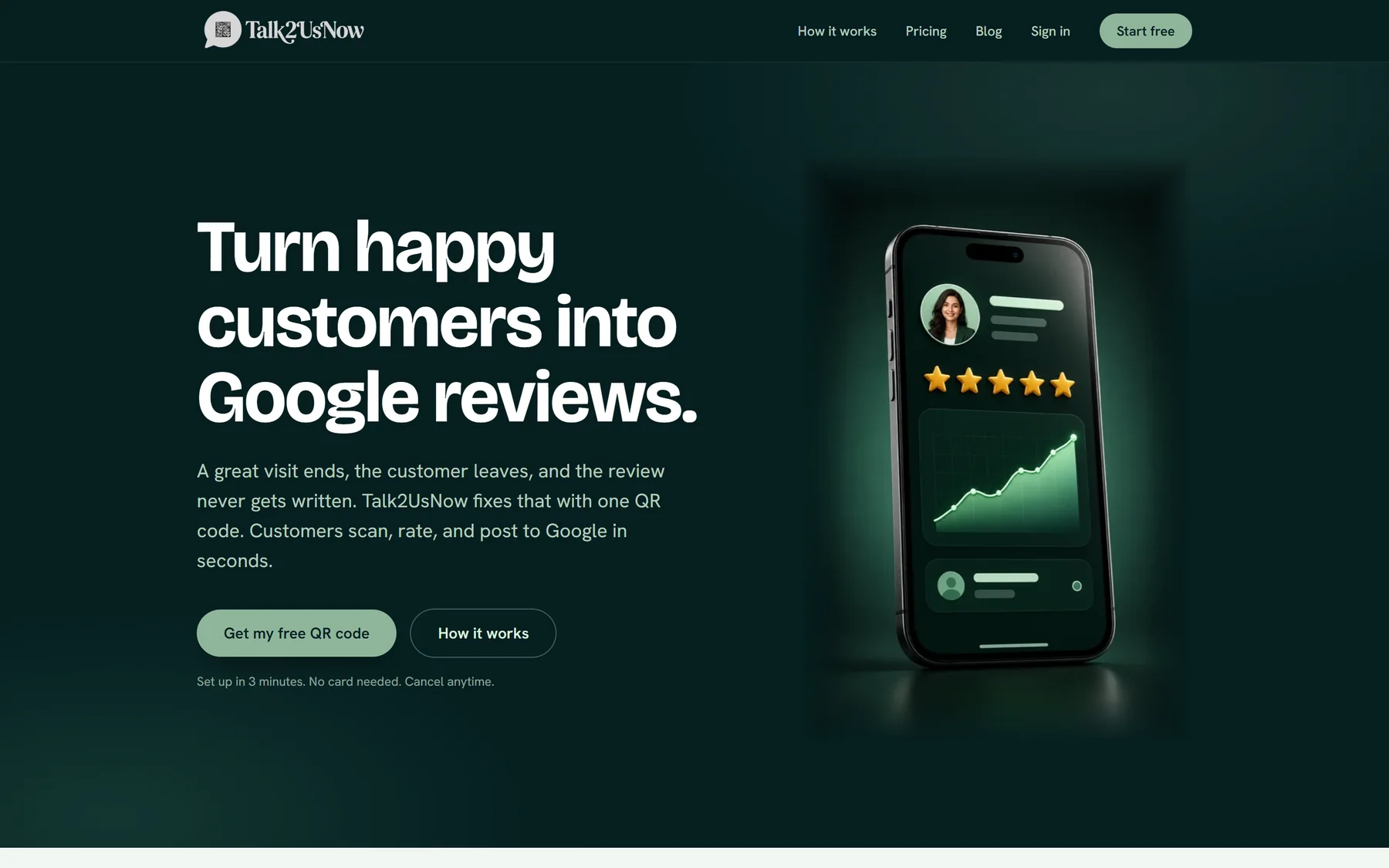
A QR review platform for local businesses such as cafés, salons and clinics. Designed, built and launched by CalyxSol.
- Type
- SaaS web application, mobile-first
- Our work
- Product planning, design, development and testing
- Status
- Live
01The problem
Getting customers to leave a review
Local businesses depend on their Google reviews. A café or clinic with only a handful of reviews is easy to overlook, even when its customers are happy.
The trouble is that happy customers rarely think to leave a review. They pay, say thanks and leave. The people most motivated to write something are often the ones who had a bad day. So the public picture tilts negative, and the owner never hears about the problems they could have fixed.
02How it works
From QR scan to review
- 01
Scan
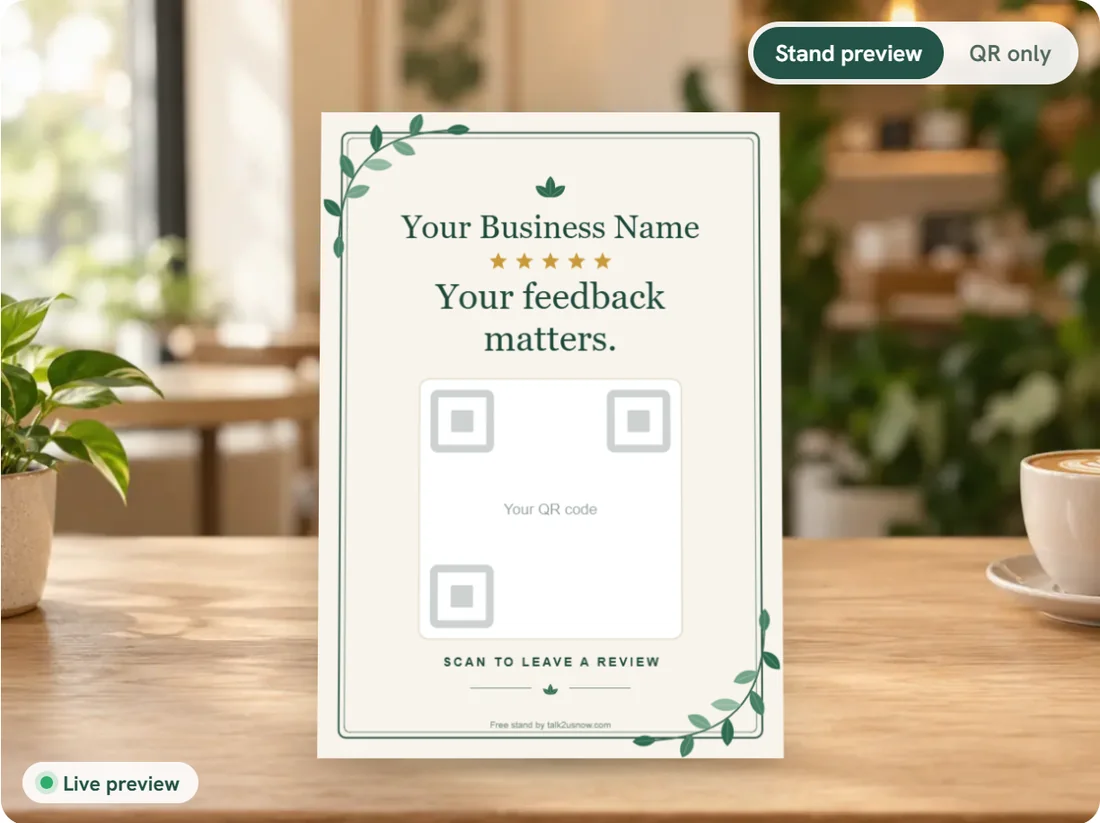
A small stand sits by the till. Customers scan it with their phone camera: no app, no account.
- 02
Rate and choose
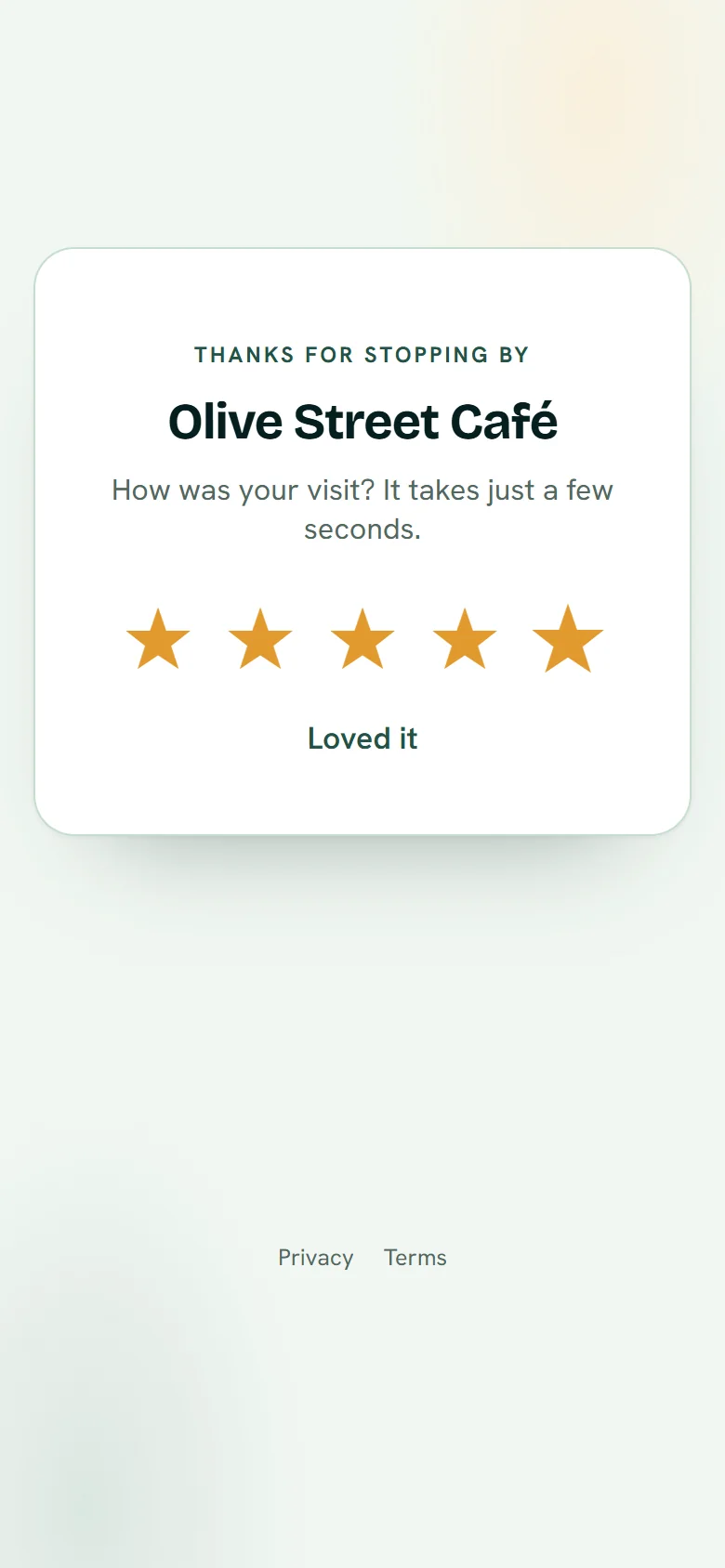
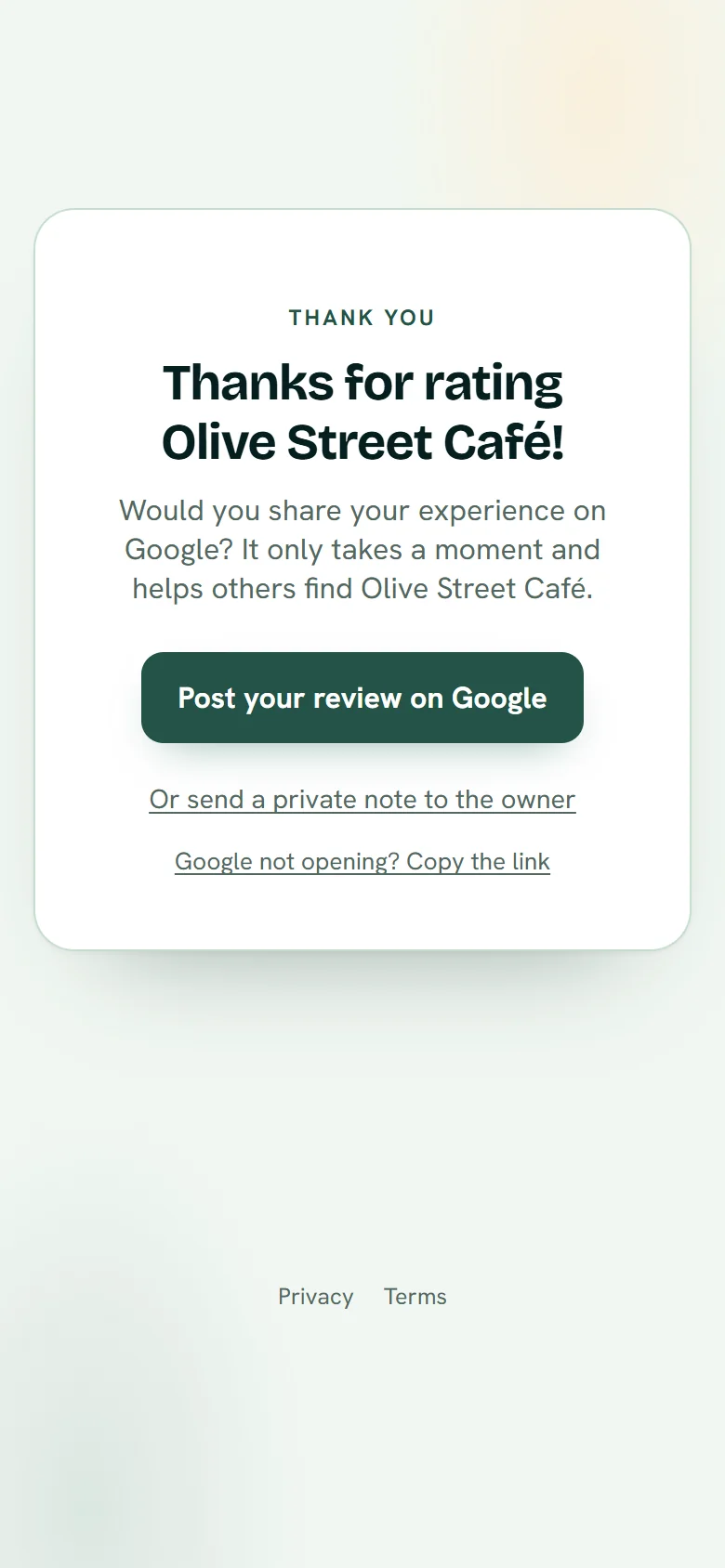
One question and five stars. Then everyone sees the same choice: post a Google review, or send the owner a private note.
- 03
The owner follows up
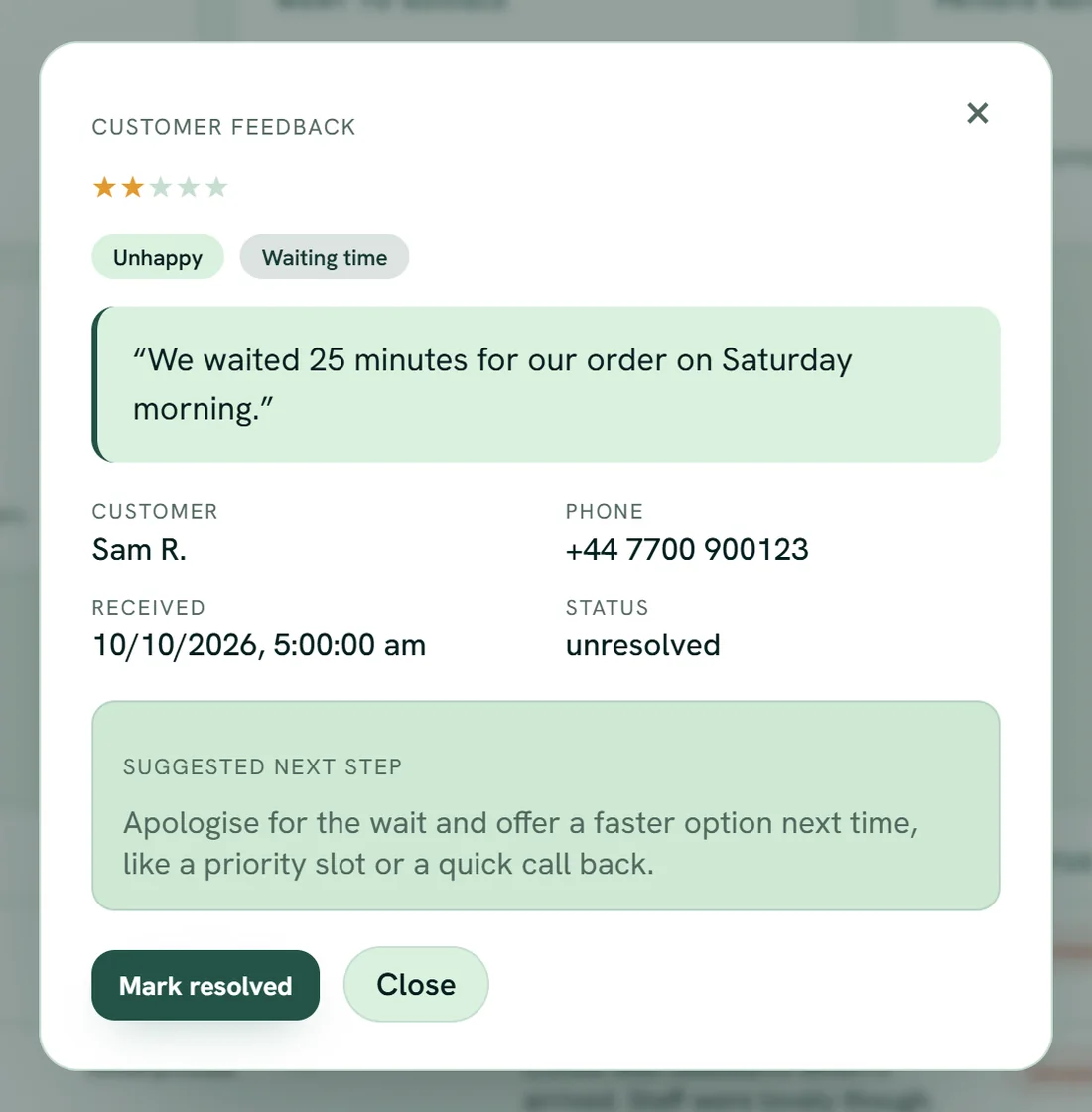
Private notes arrive by email and in the dashboard, tagged by topic with a suggested next step.
Print-ready stands
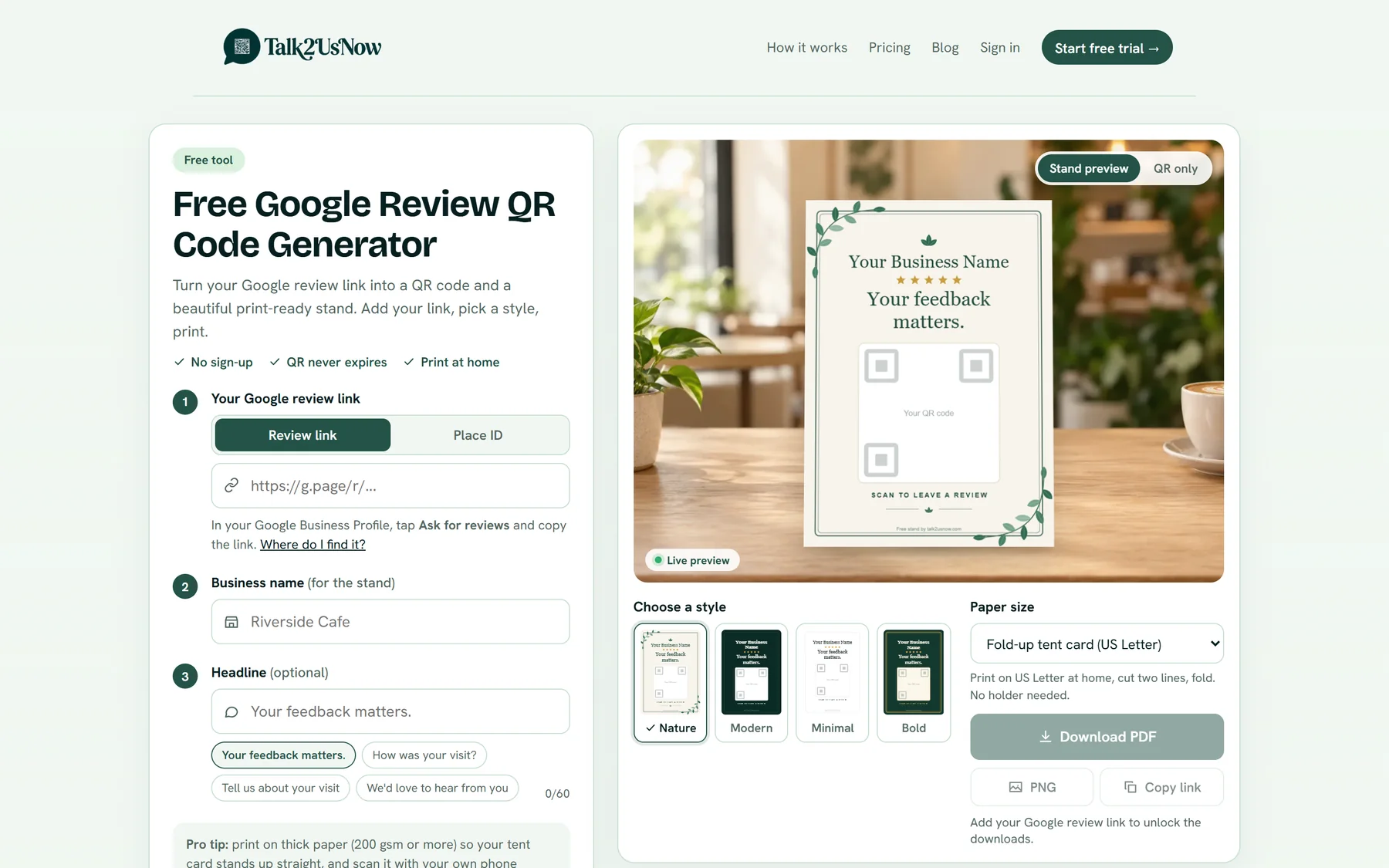
A QR code per location and a stand in four styles, as PDF or PNG.
The rating page
One question, five labelled stars and the same Google invitation for everyone.
Private notes
An optional note to the owner, with consent, emailed instantly.
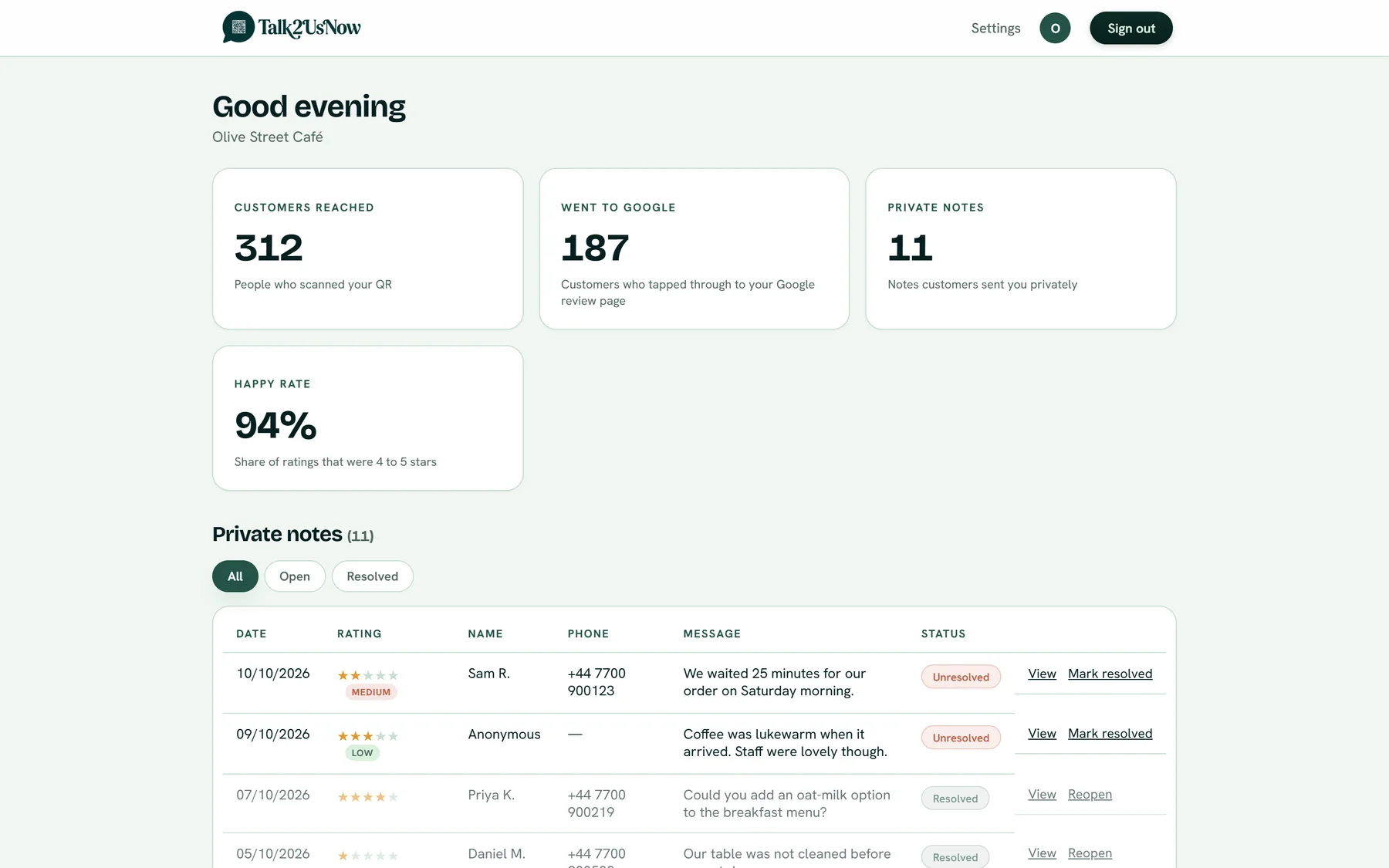
Owner dashboard
Customers reached, visits to Google, private notes and a happy rate.
Accounts and billing
Several locations per business, team access, subscriptions and data export.
A site that can be found
Landing page, blog and a free QR tool, prerendered for search and AI assistants.
03Key decisions
What shaped the product
The same invitation for everyone
Asking only happy customers for a Google review is known as review gating, and Google doesn’t allow it. Our first version sent low ratings to a private form first, always with a visible public link. We then went further: every customer now sees the same invitation, and the private note is a second option, not a detour.
No sign-up and no verification codes
SMS codes would have stopped some spam, but a code at the counter loses most responses. Spam protection runs in the background instead, without adding a step for the customer.
Rules instead of AI
Private notes are tagged by topic, such as waiting time or cleanliness, using plain keyword rules. Predictable, easy to check and free to run, which matters for a product priced for small businesses.
Numbers owners can trust
A reload or a shared link doesn’t count as a new customer. Scans and visits to Google are counted once per visit, so the dashboard reflects real people.
04Under the hood
How it was built
A React front end, a Python API and a PostgreSQL database with row-level security, so each business can only ever reach its own records. Every input is validated, public pages are rate-limited, and more than 130 automated tests cover the rating flow, permissions, billing and security rules.
React · Vite · Python · FastAPI · PostgreSQL · Supabase · Resend · Lemon Squeezy · Vercel
Technical details
- Frontend
- React and Vite. The customer page is designed mobile-first; the dashboard works on any screen.
- Backend
- A Python API built with FastAPI, with validation on every input before it reaches the database.
- Data
- PostgreSQL with row-level security, so each business can only ever reach its own records.
- Sign-in
- Token-based authentication, verified on every protected request.
- Protection
- Rate limits on public pages, strict security headers, input cleaning and parameterised queries.
- Alerts
- Instant email to the owner when private feedback arrives.
- Billing
- Subscriptions through a payment provider, with signed webhooks verified before anything changes.
- Privacy
- Consent on the feedback form, data export and deletion, and configurable retention periods.
- Testing
- More than 130 automated tests covering the rating flow, permissions, billing and security rules.
05Lessons
What we learned
1. Cutting features was some of the most useful work
SMS alerts, an AI reply assistant, several pricing tiers and a large admin console were all cut or postponed. The product became simpler and quicker to launch, and nothing essential was lost.
2. Don’t build a cockpit for empty tables
Detailed analytics need real usage to be worth anything. Building them before there are customers means guessing at what will matter.
3. Tests prove correctness, not scale
A large test suite shows the rules work. It doesn’t show how the system behaves under heavy traffic; that needs its own testing.
Have a similar project?
Tell us a little about it. We’ll get back to you by email.